Braces vs Clear Aligners
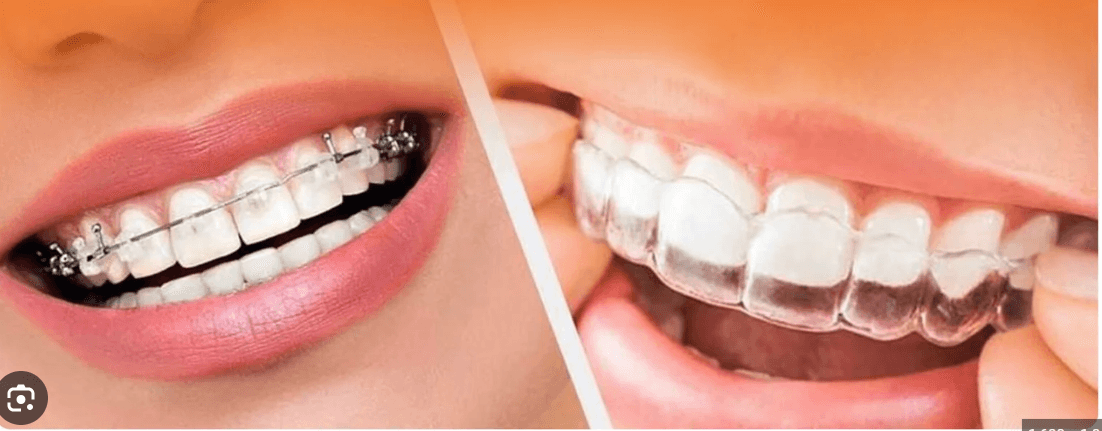
Braces vs Clear Aligners
Why orthodontic care no longer has to hurt, disrupt, or announce itself
For decades, orthodontic care followed a single path. If teeth needed alignment, braces were fitted, discomfort was accepted, and life adjusted around treatment. There were no alternatives to consider and very few questions asked. Pain, inconvenience, and visibility were treated as unavoidable parts of the process. People endured them because they believed that was the price of improvement.
That mindset has slowly begun to change.
Today, people approach orthodontic care with different expectations. They ask how treatment will affect their daily routine. They think about work, social life, comfort, and appearance. Adults, in particular, question why improving a smile should feel disruptive or embarrassing. The focus has shifted from simply correcting teeth to preserving quality of life during the process.
Clear aligners emerged at exactly this moment of questioning. Not as a cosmetic shortcut, but as a rethinking of how orthodontic care could be delivered. The difference they introduced was not only technical. It was philosophical. Treatment no longer had to dominate a person’s life to be effective.
The unspoken reality of living with braces
Braces are effective. That is rarely disputed. But effectiveness alone does not define the experience of treatment. Living with braces introduces a constant physical presence in the mouth. Metal brackets remain fixed to each tooth, connected by wires that exert ongoing force. This force is periodically increased during adjustment appointments, often resulting in soreness that lasts several days.
What is less frequently discussed is how this discomfort becomes cyclical. Pain does not occur once and pass. It returns after every tightening. Over months, sometimes years, this repeated soreness becomes something patients simply tolerate rather than resolve. For many, orthodontic care becomes an exercise in endurance rather than guidance.
Daily routines are altered as well. Eating requires caution. Hard, sticky, or fibrous foods are avoided entirely. Meals become less spontaneous and more controlled. Oral hygiene demands extra effort, yet remains difficult despite best intentions. Food particles and plaque collect around brackets and wires, increasing the risk of inflammation and staining.
There is also the emotional cost. Braces are always visible. Every smile, conversation, or photograph becomes a reminder that treatment is underway. For children and teenagers, this visibility may feel shared. For adults, it often feels isolating. In professional settings especially, braces can create a sense of self consciousness that lingers throughout treatment.
Pain as a legacy expectation
Perhaps the most ingrained assumption surrounding braces is that pain is simply part of orthodontic care. This belief has been passed down for generations. Tightening appointments are expected to hurt. Mouth sores are treated as normal. Discomfort is framed as proof that treatment is working.
Clear aligners challenge this narrative directly.
Aligners still apply pressure, but they do so in a controlled and gradual manner. Each aligner introduces a small change, allowing teeth to move without shock. Most people experience mild tightness when switching trays, which fades quickly. There are no wires cutting into soft tissue and no sudden adjustments that leave the mouth tender for days.
Comfort is not a luxury in orthodontics. It influences consistency, emotional wellbeing, and long term commitment. People who are comfortable are more likely to wear aligners as advised, attend reviews, and complete treatment successfully. Pain does not improve outcomes. It only makes the journey harder.
The cosmetic weight people rarely admit
Smiling is deeply personal. It affects how people feel about themselves and how they interact with others. Orthodontic treatment that alters the appearance of a smile can have a significant emotional impact, even if it is rarely spoken about openly.
Braces change a smile immediately and visibly. For adults navigating careers, relationships, and social environments, this visibility can feel intrusive. Some people adapt quickly. Others never truly do. They become more aware of their smile, not less.
Clear aligners remove this burden almost entirely. Their transparency allows treatment to remain private. Many people go through their entire aligner journey without others noticing at all. This discretion preserves confidence rather than challenging it.
For brands like Giggles, this aspect matters deeply. Orthodontic care should not make people feel exposed. It should support them quietly, without demanding attention.
Hygiene and the long term cost of compromise
Braces complicate oral hygiene in ways that are often underestimated. Cleaning around fixed hardware takes time and precision. Even with careful effort, plaque accumulation is common. Over long treatment periods, this can lead to gum irritation, enamel demineralisation, and staining.
Aligners offer a clear advantage here. Because they are removable, teeth can be brushed and flossed normally. Oral hygiene routines remain unchanged. This simplicity supports healthier gums and cleaner teeth throughout treatment.
Orthodontic care should improve oral health, not compromise it in pursuit of alignment. Aligners support both goals more naturally for many patients.
A different philosophy of care
What truly separates aligners from braces is not just the hardware, but the philosophy behind them. Braces impose treatment onto a lifestyle. Aligners adapt treatment to fit within it.
At Giggles, this distinction is central. Clear aligners are not about fixing something that is broken. They are about guiding progress gently and thoughtfully. From the first scan to the final retainer, the journey is designed to feel steady rather than overwhelming.
Aligners respect time. They reduce unnecessary clinic visits. They respect comfort. They minimise irritation and disruption. They respect confidence. They allow people to smile freely even while undergoing treatment.
This shift reflects a broader change in healthcare expectations. People no longer accept discomfort as a default. They seek solutions that work without demanding sacrifice.
Why orthodontic care no longer has to hurt, disrupt, or announce itself
As orthodontic care continues to evolve, the conversation around braces and aligners has moved beyond surface level comparisons. People are no longer choosing based solely on whether teeth will straighten. That outcome is expected. What matters now is how treatment fits into real lives over months and sometimes years. The emotional, social, and practical realities of treatment carry weight, and they shape decisions in ways that clinical charts alone cannot capture.
This shift is especially visible among adults. Many are revisiting orthodontic care years after dismissing it in their teens. What stopped them earlier was not a lack of desire, but the cost to comfort, appearance, and routine. When aligners entered the picture, they reopened a door that had long been closed.
Time, effort, and the fatigue of endurance
One of the least discussed aspects of braces is the cumulative fatigue they create. Each adjustment appointment brings a familiar pattern. Tightening. Soreness. A few days of discomfort. A return to normal. Then the cycle repeats. Over time, this pattern wears people down. What begins as tolerance often turns into quiet frustration.
Braces demand constant awareness. Every meal requires thought. Every cleaning session takes longer. Even casual moments carry a sense of caution. Over months, this sustained effort becomes draining. People endure rather than engage.
Aligners approach time differently. Progress happens through planned stages rather than repeated manual adjustments. Appointments are fewer and more focused. Discomfort is brief and predictable. Because the process feels steadier, people rarely experience the same emotional fatigue. Treatment becomes something they live with easily rather than something they push through.
Lifestyle compatibility in the real world
Orthodontic care does not exist in isolation. It runs alongside careers, families, travel, and social lives. Braces often struggle to coexist comfortably with these realities. Business meetings, public speaking, dining out, and travel all introduce moments of inconvenience. Repairs and emergencies can interrupt schedules unexpectedly.
Aligners are designed with these realities in mind. Their removability allows people to adapt treatment to their day rather than rearranging life around treatment. Travel does not require emergency planning. Social events do not require explanation. Meals remain spontaneous.
For many people, this flexibility is not a preference but a necessity. Aligners respect the complexity of modern life in ways braces rarely do.
Predictability builds trust
Braces rely heavily on in clinic adjustments. Progress often feels reactive rather than planned. Patients attend appointments without always understanding what will change or why. This unpredictability can create anxiety, especially when discomfort follows.
Aligners are built on predictability. Before treatment begins, the entire journey is mapped digitally. Tooth movement is planned step by step. Patients can see where they are headed and how long it may take. This transparency builds trust.
When people understand what is happening, they feel calmer and more confident. Treatment feels collaborative rather than imposed. This sense of control changes how people experience orthodontic care.
Cost beyond the number on paper
Cost comparisons between braces and aligners are often oversimplified. Braces may appear less expensive initially, but this ignores indirect costs. Frequent visits mean time away from work. Repairs add unexpected appointments. Hygiene complications can lead to additional dental treatment.
Aligners may carry a higher initial price in some cases, but they often reduce these hidden costs. Fewer visits, fewer disruptions, and easier hygiene all contribute to long term value. Transparent pricing models, such as those used by brands like Giggles, further reduce financial anxiety by making costs clear from the start.
Value is not only about money. It is about time, comfort, and peace of mind.
Compliance and responsibility
One argument often made in favour of braces is that they require no daily responsibility. Once fitted, they work continuously. This can be beneficial for patients who struggle with routine.
Aligners require commitment. They must be worn consistently to deliver planned results. This responsibility suits people who value autonomy and are willing to participate actively in their care.
Rather than viewing this as a drawback, many see it as empowering. Aligners place control back in the hands of the individual. Treatment becomes something done with you, not to you.
When braces still matter
It is important to acknowledge that braces remain essential in certain situations. Complex bite issues, severe misalignment, or cases requiring significant mechanical control may benefit more from fixed appliances. An ethical orthodontic practice will recommend braces when they are genuinely the best solution.
This honesty strengthens trust. Aligners are not positioned as a replacement for all orthodontic care, but as an evolution within it. They expand choice rather than eliminate options.
Why the shift toward aligners is accelerating
The growing preference for aligners is not a trend driven by aesthetics alone. It reflects a broader change in how people approach healthcare. Comfort, clarity, and respect are no longer negotiable. People expect treatment to align with their lives rather than disrupt them.
Aligners meet these expectations. They deliver results while preserving dignity. They support progress without demanding sacrifice. They fit into modern routines where flexibility and discretion matter.
Brands like Giggles have embraced this philosophy fully. By combining orthodontic expertise with a human centred approach, they have redefined what smile care can feel like.
A clear conclusion with confidence
Braces will always have a place in orthodontics. They are effective and sometimes necessary. But effectiveness alone is no longer enough. People want care that feels considered, not endured.
Clear aligners offer that alternative. They straighten teeth while respecting comfort, confidence, and daily life. They replace cycles of pain with steady guidance. They allow people to improve their smile without announcing it to the world.
For many today, the choice is no longer between results and comfort. With aligners, they can have both.
Orthodontic care has moved forward. It no longer needs to hurt, disrupt, or define a person’s appearance. A quieter way exists, and it is becoming the preferred path for those who value progress without compromise.